
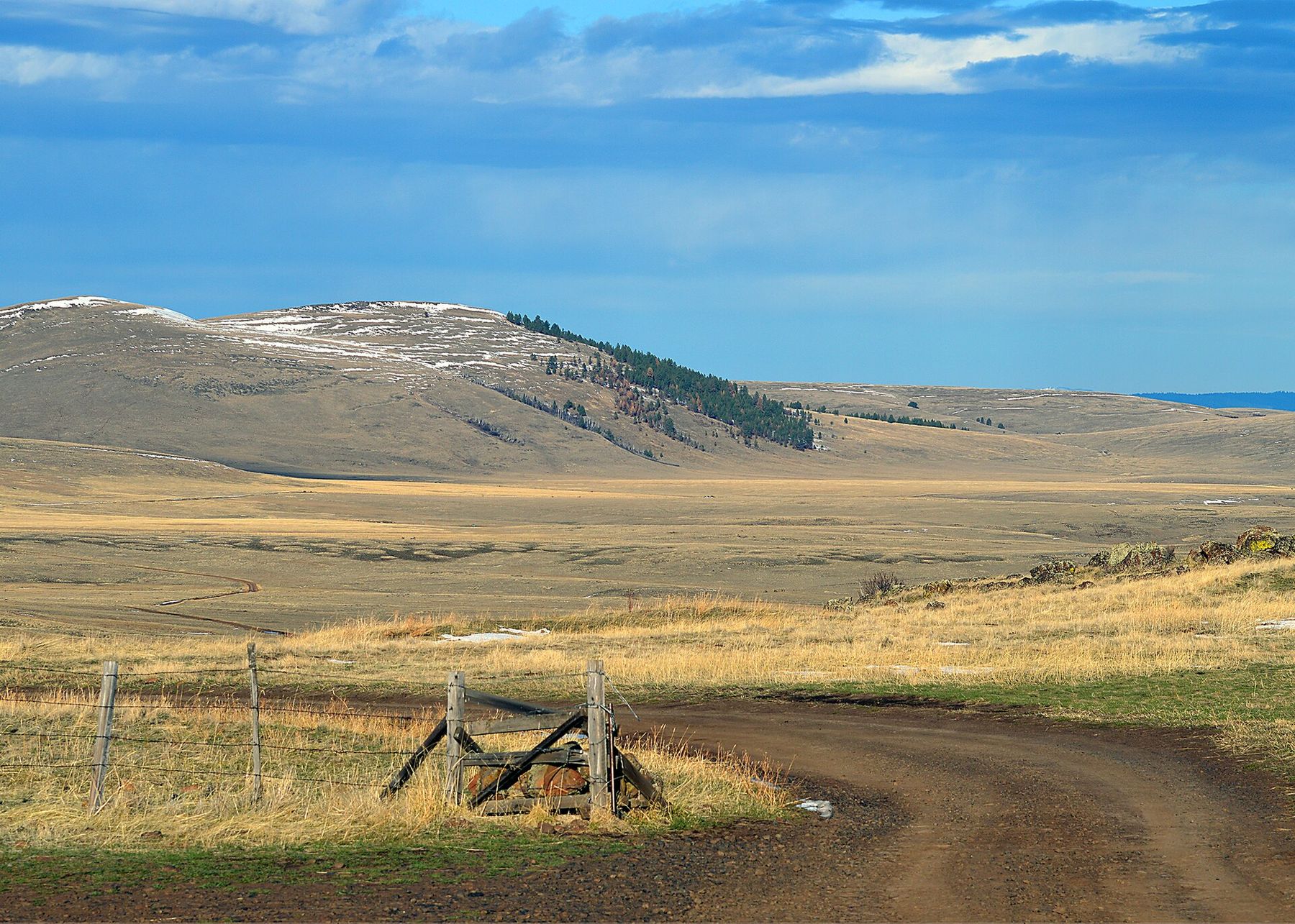
The Nature Conservancy's Zumwalt Prairie Preserve, Oregon: a vast native grassland protected by buying it.
Oregon Department of Fish & Wildlife, 0058 zumwalt prairie swart odfw (27203258205), 2015EcoAxes / Included ideologies / Conservation philosophies and practice
Conservation approachPrivate Land Conservation
The approach built by The Nature Conservancy and thousands of land trusts. It protects nature by buying land, holding conservation easements and working with private owners, so that wild habitat is kept from development through property, contracts and philanthropy, without state regulation or changes to the wider economy.
- Key figures
- The Nature Conservancy, the Land Trust Alliance, Richard Brewer (as historian), Jeff Pidot (as critic of easements), Doug and Kris Tompkins (Tompkins Conservation)
Where it stands
- Environmental EthicsAnthropocentrismEcocentrism
- Human–Nature RelationsHuman SeparationHuman Integration
- Ecological InterventionNoninterventionActive Stewardship
- Economic PhilosophyGreen GrowthPost-Growth
- Resource OwnershipPrivate StewardshipCommons Governance
- Environmental AuthorityCentralized AuthorityLocal Autonomy
- Environmental JusticeAggregate OutcomesDistributive Justice
- Technological OutlookTechnological OptimismEcological Precaution
- Energy PhilosophyEnergy AbundanceEnergy Sufficiency
- Conservation StrategySustainable UseStrict Protection
- Human–Wildlife RelationsHuman PriorityWildlife Accommodation
- Agricultural EcologyLand SparingLand Sharing
- Global ResponsibilityNational SovereigntyInternational Ecological Obligation
- Ecological Political PriorityIncremental ReformTransformative Change
Its firmest commitments are to strict protection of wild habitat, achieved through private ownership, easements and philanthropy, and to change within existing institutions. It values nature for its own sake as well as for people, and treats land markets as an instrument of conservation rather than a threat. Its views on energy, technology and international obligation vary and carry wide bands.
Definition
Private land conservation protects nature with the tools of property. A conservation organisation may buy land outright and run it as a reserve. It may pay an owner to put a conservation easement on the land, a legal restriction that stays with the title forever and bars development while the owner keeps the land. Or it may help owners manage their land for wildlife.
Its premise is that ownership is the most reliable protection, and that much of the most valuable habitat is in private hands. It works within the existing economy without trying to change it, and it treats donors, landowners and markets as allies.
Historical development
The Nature Conservancy grew in 1951 out of a committee of ecologists who wanted to buy threatened natural areas. Its first purchase, the Mianus River Gorge in New York, came in 1955. Over the following decades it bought and protected millions of acres. Local land trusts multiplied across the United States, coordinated from 1982 by the Land Trust Alliance.
From 1976, conservation easements received favourable treatment under federal tax law. By the 2020s private land trusts protected more than sixty million acres in the United States alone. The model spread around the world, from private reserves in South Africa and Latin America to Doug and Kris Tompkins’s purchase of huge areas of Patagonia, much of which they later donated to create national parks in Chile and Argentina.
Principal claims
- The most secure protection for habitat is ownership, or a legal restriction on its use that lasts forever.
- Much of the world’s important habitat is on private land and can only be protected with its owners’ cooperation.
- Voluntary deals and philanthropy can achieve conservation faster and with less conflict than regulation.
- Science should guide where the money goes, toward the places that protect the most biodiversity.
- Conservation can work with business and landowners instead of against them.
Policy implications
The approach supports tax incentives for easements and gifts of land, public money to match private purchases, payments to landowners for habitat, and partnerships between conservation groups, agencies and companies. It is wary of anything that would turn owners against conservation, such as strict regulation of private land.
Internal disagreements
Practitioners disagree about how closely to work with corporations, a question sharpened by The Nature Conservancy’s dealings with oil and gas companies. They differ on whether easements are a lasting solution or a short-term fix, and on whether the model should extend to working land such as ranches and forests or concentrate on strict reserves.
Criticisms and controversies
Critics argue that easements give wealthy donors large tax deductions for land they would never have developed, and a Washington Post investigation in 2003 exposed cases of self-dealing at The Nature Conservancy. Others note that private conservation follows the money, protecting what donors care about more than what most needs protecting, and that it can concentrate control of land in a few large organisations or rich individuals.
Supporters point to the sheer amount of land it has protected, often where public agencies could not act.
Relationships to other traditions
Private land conservation shares preservationism’s aim of protecting wild places, but pursues it through property instead of public parks. It uses the market tools of market environmentalism and the cooperation with landowners of conservation conservatism. It often works alongside the legal strategies of reform environmentalism.
References and further reading
- Brewer, R. (2003). Conservancy: The Land Trust Movement in America. Hanover, NH: University Press of New England.
- Birchard, B. (2005). Nature’s Keepers: The Remarkable Story of How The Nature Conservancy Became the Largest Environmental Organization in the World. San Francisco: Jossey-Bass.
- Merenlender, A. M., Huntsinger, L., Guthey, G. and Fairfax, S. K. (2004). Land trusts and conservation easements: who is conserving what for whom? Conservation Biology, 18(1), 65–76.
- Stephens, J. and Ottaway, D. B. (2003). Nonprofit land bank amasses billions. The Washington Post, 4 May.
- Fairfax, S. K. et al. (2005). Buying Nature: The Limits of Land Acquisition as a Conservation Strategy, 1780–2004. Cambridge, MA: MIT Press.